Sunday, April 15, 2012

Sales People and Social Engineering

Had an email exchange with an unknown sales person from a company I have never heard of before:

Email 1:
PSG: We are blah blah managed security provider doing SIEM, IPS monitoring, etc. Do you have 15 minutes for a call?
Me: No. We do these inhouse and have no need for your services.

Email 2:
PSG:
Thank you for the feedback. Generally, when a client has an in-house SIEM tool, I like to always ask the following questions to help better understand if the tool is effective.
  1. What are you doing for alerting for all your critical device?
  2. If you had a breach, how quickly would you know about it? How effectively would you be able to react?
  3. Do you feel that you have it fully deployed in your environment for all your critical devices?
  4. Do you have a dedicated staff to support this tool effectively?

I know these are tough question to address over an email. Would you be available for a 15 minute call this week?

Me: No. This is information I would not discuss without an NDA and a legitimate business reason.

Email 3:
PSG: You are right. Here is our mutual NDA--please sign an send back and then we can discuss.
Me: No. I have no "legitimate business reason" to discuss this with you. Please take my name off your list.

Emails are a bit abridged except for email 2, which is a copy-paste of the original.

I could answer 4 I suppose, but 1-3 would be considered highly confidential information.

Perhaps my first mistake was engaging with him in the first email, but I sympathize with sales people and wanted him to use his time efficiently by knowing that he will not make a sale here.

But the subsequent emails, apart from putting himself firmly in my blackhole list, got me thinking.

How much does it take to set up a website, print some business cards and get a 800 number? I think $1000 is adequate. Even better--invite a number of local security people to a lunch-and-learn. At about $50/head (3 course meal at mid-range steak house in the Metro Boston area), an attacker can get pretty good information by asking just one question: "What keeps you up at night?"

I've been to area meetups where security people describe internal controls or security problems in front of a room full of strangers.

We do awareness training for general users. Is it time to do a specialized awareness training for security people?


Friday, January 27, 2012

LinkedIn's sneaky privacy policy change

[Only relevant if you are on LinkedIn]

While the world is railing against Google's privacy policy change, LinkedIn has quietly opted in its members to a policy that says they can use the members'
name/photo in advertisements.

Forwarded email below:
Some simple actions to be considered:

1. Place the cursor on your name at the top right corner of the screen. From the small pull down menu that appears, select "settings"
2. Then click "Account" on the left/bottom
3. In the column next to Account, select the option "Manage Social Advertising"
4. Finally un-tick the box "LinkedIn may use my name and photo in social advertising"
5. and Save


I normally cringe when I see "tell all your contacts" but in this case I guess it is justified. So tell all your contacts.

Monday, January 17, 2011

Malware kits becoming professional, with a ton of metrics

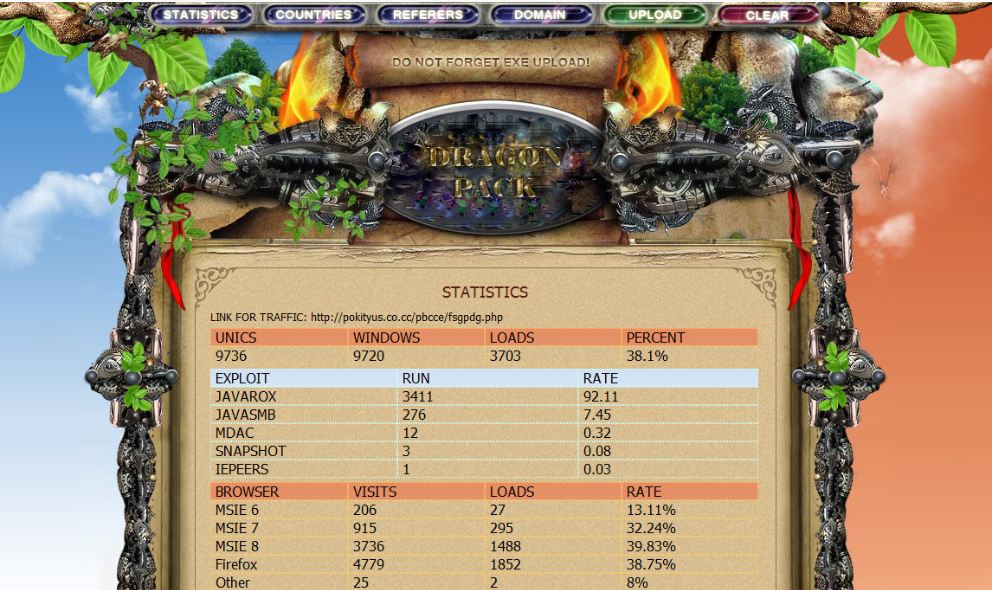
Krebs on Security has posted an image of the administration dashboard of 2 malware kits

Here is one:


Apart from the interesting background and the mis-spelled 'Unics' the analytics is very nice. After all, every cybercriminal businessman needs metrics!

Here is the full post.

While Brian talks about these being Java exploit packs, I am more alarmed by the professional (for lack of a better word) look of the kits. This is geared towards someone who wants to see what works and what does not so attacks can be fine-tuned or changed. And I am afraid it is going to get workse

Tuesday, June 29, 2010

Russian spies and adhoc wi-fi

On June 28, 2010, the FBI arrested 10 Russian spies. The complaint against two of them, Anna Chapman and Mikhail Semenko is fascinating. Instead of dead drops at cemeteries or brush-passes at crowded restaurants, these spies set up adhoc wireless networks between 2 laptops and exchanged information.

The complaint first describes what an adhoc wireless network is:

and then cites many examples of how when Anna Chapman opened up her laptop, and when a certain Russian government official was nearby (in a van outside a coffeeshop or standing outside a bookstore), an ad-hoc wireless network with the same two MAC addresses sprung up.
Semenko used the same technique. In one instance, he was sitting in a restaurant, while a car with diplomatic plates (issued to the Russian embassy) entered the parking lot and sat there for 20 minutes and then left.

Further down, Semenko described to an undercover FBI agent posing as a Russian diplomat how he zipped up the files, opened up his laptop to set up the adhoc wifi and transferred the files.

A number of questions and thoughts:
- Because the FBI knew enough to pose to undercover agents as Russians and arrange meets with the spies, they had penetrated the ring for a very long time. Other documents mention search warrants against safe-deposit boxes as early as 2001.
- Which brings up another question. Why did Russian agent and FBI counter-intelligence honcho Robert Hanssen, not warn them? His position in the FBI should have guaranteed he knew about this.
- Or did Hanssen, who was arrested in 2001, give them up?
- But if Hanssen knew about this team, why didn't the Russians pull them out?
- Anna Chapman must have smelled a rat, and that's why she bought a disposable phone (to call Russia?) and did not show up for the meeting the next day (June 27)
- Which must have led to the arrests on the 28th because the FBI decided the spies were on to them.

Thursday, May 6, 2010

What Virustotal says about a suspicious attachment and AV products

I received a $50 iTunes gift certificate today as a zip file. Yay!

I uploaded it to Virustotal, and the result is below. If the formatting is lost, you can see the report here: http://shar.es/m6tDP

First, Virustotal told me that they already have seen this file. Next, very few AVs identified it as a threat. And at the risk of beating up on McAfee again, their gateway version with a May 6 def identified it, but their regular (?) version with a May 7 def did not! In all, only 8 of 41 identified it.

AVG, which is on my laptop, did not identify it either.

My question: what happened to AV companies sharing knowledge? I would
have thought in 24 hours at least all the big boys would have shared the
signature. A 20% detection rate is pretty bad. But as McAfee's left hand
does not know what its other left hand is doing, I guess I should not be
too surprised.

Antivirus Version Last Update Result
a-squared 4.5.0.50 2010.05.07 -
AhnLab-V3 2010.05.07.00 2010.05.06 -
AntiVir 8.2.1.236 2010.05.06 -
Antiy-AVL 2.0.3.7 2010.05.06 -
Authentium 5.2.0.5 2010.05.06 -
Avast 4.8.1351.0 2010.05.06 -
Avast5 5.0.332.0 2010.05.06 -
AVG 9.0.0.787 2010.05.07 -
BitDefender 7.2 2010.05.07 Gen:Variant.Bredo.4
CAT-QuickHeal 10.00 2010.05.04 -
ClamAV 0.96.0.3-git 2010.05.06 -
Comodo 4783 2010.05.06 -
DrWeb 5.0.2.03300 2010.05.07 -
eSafe 7.0.17.0 2010.05.06 -
eTrust-Vet 35.2.7472 2010.05.06 -
F-Prot 4.5.1.85 2010.05.06 -
F-Secure 9.0.15370.0 2010.05.07 Gen:Variant.Bredo.4
Fortinet 4.0.14.0 2010.05.05 -
GData 21 2010.05.07 Gen:Variant.Bredo.4
Ikarus T3.1.1.84.0 2010.05.06 -
Jiangmin 13.0.900 2010.05.06 -
Kaspersky 7.0.0.125 2010.05.07 -
McAfee 5.400.0.1158 2010.05.07 -
McAfee-GW-Edition 2010.1 2010.05.06 Artemis!ECB1C56D7D93
Microsoft 1.5703 2010.05.06 -
NOD32 5092 2010.05.06 -
Norman 6.04.12 2010.05.06 -
nProtect 2010-05-06.02 2010.05.06 Gen:Variant.Bredo.4
Panda 10.0.2.7 2010.05.06 Suspicious file
PCTools 7.0.3.5 2010.05.06 -
Prevx 3.0 2010.05.07 -
Rising 22.46.03.04 2010.05.06 -
Sophos 4.53.0 2010.05.07 Mal/FakeAV-BW
Sunbelt 6272 2010.05.06 -
Symantec 20091.2.0.41 2010.05.06 -
TheHacker 6.5.2.0.277 2010.05.06 -
TrendMicro 9.120.0.1004 2010.05.06 PAK_Generic.001
TrendMicro-HouseCall 9.120.0.1004 2010.05.07 -
VBA32 3.12.12.4 2010.05.06 -
ViRobot 2010.5.6.2304 2010.05.06 -
VirusBuster 5.0.27.0 2010.05.06 -

Saturday, April 10, 2010

Cheapest 419 scam ever

Received this just now.Are they just giving up now? Or is it some sort of ultra-soft-sell?

Also notice that they are not sure about my religious affiliation


新しいメールアドレスをお知らせします
新しいメールアドレス: sadiqaliman1@yahoo.co.jp

Dearest one,

I greet you in names of our almighty allah? however let me give you brief introduction myself, My name is Aliman Keita the only surviving daughter of Mr &Mrs Sadiq Keita, he deposited ($6.5) I will give more details concerning me and the transaction.


Miss Aliman.


- Keita Sadiq Aliman

Saturday, January 30, 2010

A "safe" handgun or a $9700 design fail waiting to happen?

Wired is reporting that Armatix introduced a Euro 7000 (US$ 9700) handgun that can only be fired if it is armed via a wristwatch worn by the shooter.
This year, the highest-tech gun belonged to Armatix. The German firm has an electronic safety that automatically disables the pistol when it’s not within a few inches of a custom wristwatch. The watch sends a wireless arming signal to the gun. If the gun is picking up a signal from the watch, a green LED on the back lights up. Try squeezing the handle without wearing the watch, and you will see a red warning light. Anyone can pick up a limited edition version of the pistol for about 7,000 euro, which is pretty steep for a .22cal plinker. They start shipping next month.

Few inches, eh? Smells like RFID. Then we found this on Armatix's website:
The benefits of biometrics (sole allocation to specific people) are also combined with those of Radio Frequency Identification ( split- Seconf activation, hands-free operation.

"Seconf" above should be "second", but that might be the least of their problems. My problem is, given the many, many security failures I have seen in basic authorization/authentication schemes, I anticipate a slew of them in this handgun. Here are some of them:
  1. It's not like RFID has been read or cloned. Oh wait!
  2. RFID can be jammed. For that matter, any RF can be jammed.
  3. Forget hightech.. throwing a bucket of water at the person holding the gun at you might work. I see a Rush Hour sequel where Chris Tucker almost gets Jackie Chan killed by spilling coffee on his wrist and rendering his gun into a paperweight.
  4. The flip-side of jamming is arming. People have read RFID passport numbers and cloned them. Then it is just a matter of playing that back, from a more powerful transmitter, and suddenly the "safe" gun will fire a bullet.
  5. And then ofcourse, the same RFID scanners can be used to identify who is carrying those guns and wrist-watches.

One can only hope that this gun will be completely safe because there are no morons who will pay that kind of money for a .22

Thursday, January 28, 2010

Multiple Congresspeople websites defaced

National Journal's Hotcall reported around 3:20 AM on Thursday, January 28 that various congress people's (both republican and democrat) websites were defaced.

The message was crude and simple:
"F--- OBAMA!! Red Eye CREW !!!!! O RESTO E HACKER!!! by HADES; m4V3RiCk; T4ph0d4 -- FROM BRASIL," the messages read.

Praetorian Prefect has some screenshots and what seems to be a pretty complete list (perhaps compiled by going through the sites manually around 4 AM!)

http://www.joewilson.house.gov/
http://bachus.house.gov/
http://www.baird.house.gov/
http://www.barrow.house.gov/
http://www.gonzalez.house.gov/
http://mcnerney.house.gov/
http://mikepence.house.gov/
http://driehaus.house.gov/
http://carson.house.gov/
http://campbell.house.gov/
http://doggett.house.gov/
http://coffman.house.gov/
http://www.kosmas.house.gov/
http://hersethsandlin.house.gov/
http://lujan.house.gov/
http://www.mccollum.house.gov/
http://teague.house.gov/
http://mitchell.house.gov/
http://www.roe.house.gov/
http://www.lofgren.house.gov/
http://carnahan.house.gov/
http://www.chrismurphy.house.gov/
http://hunter.house.gov/
http://olver.house.gov/
http://arcuri.house.gov/
http://olver.house.gov/
http://tierney.house.gov/

A few committee sites were affected as well:

http://republicans.financialservices.house.gov/
http://republicans.oversight.house.gov/
http://gop.cha.house.gov/

Ironically, one of the first defacements discovered was on Congressman (R-SC) Joe Wilson's site, who (in)famously yelled "You Lie!" at Obama. Mr. Wilson gave one of the first live responses to Obama's SOTU speech.

The websites are maintained by the House IT staff, and most of them run on identical systems and software. So it is not surprising that after the first site was found to be vulnerable, the attackers found a rich array of soft targets.

As a result, the serial defacement does not surprise me--if anything, I am surprised they did not hack 500+ sites.

Praetorian Prefect identified the Joomla CMS as the one common factor on all the defaced websites (but not all Congressional sites running Joomla were defaced)

It seems a particular Joomla component or module was vulnerable and was exploited. I just hope the knee-jerk reaction to this is not to go back to some proprietary CMS.

Saturday, January 16, 2010

How mobile phone users stumbled into other people's FaceBook account

AP is reporting: "Network flaw causes scary Web error":
A Georgia mother and her two daughters logged onto Facebook from mobile phones last weekend and wound up in a startling place: strangers' accounts with full access to troves of private information.

The glitch -- the result of a routing problem at the family's wireless carrier, AT&T -- revealed a little known security flaw with far reaching implications for everyone on the Internet, not just Facebook users.
True. Most internet sites that do not use secure login (https) may be vulnerable until AT&T fixes their problem. Boston Globe readers are reporting that they faced the same problem as far back in 2007, on carriers other than ATT Wireless.

As an aside, I had to laugh after reading this line in the AP article:
In each case, the Internet lost track of who was who, putting the women into the wrong accounts.
Reminds me of this AOL helpdesk gem: "This is not an AOL problem. Have
you tried calling the Internet's support department?"

To understand how this could have happened, lets take a look at how a website knows who is who once they log in. Of course, they could just have your username added to each page request. But then anyone who knew your username would be able to impersonate you. One popular mechanism is using session cookies. Here is a very simplified description:
HTTP is stateless (meaning the web server has no memory of who you are or what you just did), so the server has no way of keeping track of the users who logged in (and tying them to a specific browser).

Once a user logs in, a cookie is set with a lifetime (say, 15 minutes), and this cookie and matching userid is stored somewhere, preferably a database. It is typically a long and random string like xyn29f071bca9bf7f85da28205439fc3, so someone can not just guess it.

Every time the user tries to go to a protected page, the server reads the cookie from the browser, looks up the username that matches the cookie, and allows (or disallows) access. The cookie is also updated with each request (lifetime extended by 15 minutes). If no request is made, the cookie expires, and user gets logged out for inactivity. If the user chooses to log out or in the previous case gets logged out due to idle timeout, his/her cookie is deleted on the server, so they can not access protected pages any more.

So, if for some reason Alice gets Bob's cookie (before Bob logs out), the server will think Alice is Bob, look up pages that Bob has access to, and bada bing!--Alice will be looking at Bob's pages.

Now the million dollar question is, how would Alice get access to Bob's Facebook session cookies? Stealing session-cookies is a well-known attack; people have demonstrated this on multiple sites including Google Spreadsheets, and bad guys have used this to compromise accounts. But we can be pretty sure in this case the person who experienced this wasn't doing any such attack. So what happened?

Here we enter the murky territory of speculation. We know that AT&T is worried about the amount of data usage by it's wireless customers because their network can't keep up. So is it possible they used HTTP pipelining to improve performance?
Normally, HTTP requests are issued sequentially, with the next request being issued only after the response to the current request has been completely received. Depending on network latencies and bandwidth limitations, this can result in a significant delay before the next request is seen by the server.

HTTP/1.1 allows multiple HTTP requests to be written out to a socket together without waiting for the corresponding responses. The requestor then waits for the responses to arrive in the order in which they were requested. The act of pipelining the requests can result in a dramatic improvement in page loading times, especially over high latency connections.

What I think happened was: ATT's web proxy uses pipelining. User A and User B where both trying to log onto Facebook at the same time. When the responses came back it messed up the order, and sent the response destined for User A to User B's browser, thus giving her access to User A's facebook page.

PS: Where did the response meant for User B go? To user A? To yet another person who has not come forward yet? To User B's browser, which then discarded it because it thought it already got a response to its original request? To the bit-bucket? Who knows.

Monday, January 11, 2010

Harsh: Google Security chief's night-job

Gawker has a post about Google Apps' Director of Security Eran Feigenbaum, and his not so secret identity as Eran Raven, mentalist/magician.

I had to laugh out loud after reading this:
Maybe it should come as no surprise that Google's Director of Security is also a "mentalist" magician; few can better sell the illusion of ironclad internet security, after all, than a master of deception who fooled thousands of NBC viewers.

But Eran Feigenbaum — better known as "Eran Raven" — has turned the cheese knob up awfully high, considering his buttoned-down job as the Director of Security for the putative blue-chip operation that is Google Enterprise, which is trying to sell "cloud computing" to no less uptight a customer than the federal government.

Tuesday, January 5, 2010

We don't need no stinking security in our digital photo frames

Update (Jan 6, 2010): Looks like FrameChannel is doing something to block access to known URLs. It could be something as simple as user-agent checking, but at least it is a start.

2010's first security vulnerability (that I know of) is a doozy. But before getting into that, lets take a peek into the design meeting that resulted in it.

Person 1: Lets see.. how would each customer identify the product for activation?
Person 2: We will stick a random code on each package
Big boss: No, that is too much work
Person 3: You know, each device already has an unique identifier. This MAC address...
Person 2: Shouldn't it be random? Should we talk to the security guys?
Big Boss: Awesome. Why would a photo frame need security? This MAC thingy sure looks very unfriendly, so lets label it as a user-convenience feature. While you guys do that, I will go tell my boss I came up with the idea.

This not-so-unlikely scenario is brought to you courtesy of an excellent blog post by Casey Halverson, owner of two W820 Kodak digital picture frames.

Knowing that the frames can display pretty much any RSS feed, Mr. Halvereson discovered that the configuration screen shows a URL for the RSS feed that ends in what looks suspiciously like a MAC address, because, you guessed it--it IS a MAC address. (The link below is not clickable by choice--we don't know what will be there if you visit it)
http://rss.framechannel.com//productId=KD9371/frameId=00:23:4D:B8:07:6D

Look, its an RSS feed of what my picture frame is showing now! I can send this nice URL to everyone I know so they can look at all my private content I have configured for this device. Now, under no circumstances would I recommend changing the last digits of this MAC address frame ID to another number….because you would get someone else’s picture frame content. Why would you want to do that?

If you don't know how MAC addresses are assigned and numbered, here is a quick introduction. The first 6 hexadecimal digits (in this case, 00:23:4D) designate the manufacturer of the network card, and the remaining 6 hexadecimal digits identify a serial number assigned by the manufacturer.

So if you are looking at a Kodak photoframe, who does not make network chips, it is a pretty safe bet that they buy the chip from someone else (or their outsourced manufacturer does, but same effect). It is also a near certainty that because of economies of scale, these chips will be bought from the same company. What I am leading up to is, this means virtually ALL Kodak wireless frames will have the same first 6 digits, making the remaining address-space any number from 00:00:00 to FF:FF:FF -- a total of slightly over 16 million possible numbers: trivial for a computer to generate and check. 00:23:4D:B8:07:6D is manufactured by Hon Hai Precision Ind. Co., Ltd. Obviously, all their cards will not be used on the Kodak frames. But now that we know the name of the manufacturer, a bad guy can go and find other prefixes assigned to them, and expand the search.

The frames, by the way, can not pull down RSS feeds on their own. The feeds need to be managed through a company called FrameChannel, which, as the name indicates, is in the business of creating channels for picture frames. They very conveniently list a number of frame manufacturers they support.

Could they all be vulnerable to the same attack?

They also are saying that Woot sold 100,000 Kodak frames on Dec 20, the first day they went on the market. Given the other manufacturers, the problem-size could be more than a million vulnerable frames out there.

In their FAQ, they answered (as of this writing; I expect this to change soon):
Who can see the pictures in my account?

Unless you add pictures to a public or group channel, or share them with your invited friends, you are the only one who will see images in your account. No other FrameChannel user will ever see images you upload or add to your account unless specifically approved by you (such as in the case of a public user generated or group channel, or as a contributor to your friends' accounts). (emphasis mine)

Aw.

Someone could point all the unsold/unactivated frames to pornography, or other objectionable or even illegal content like child pornography. So if you have one of these frames, what should you do? Don't feel safe because you only have nature photos. If you have the Weather channel configured, a remote viewer may be able to figure out your city and state. If your userid contains your name in some form, they may be able to narrow it down much further.

In the configuration screen, there is a URL parameter called reset=0. Any guesses as to what reset=1 will do? Yes, it gives a new activation code, and I presume it deactivates the old code. Seems like this can be used to kill feeds to a frame.

The next one is a bit more serious. One report says they saw something like:
“This frame has been preactivated” and gave the username and password and invited the user to login to framechannel.com to upload their own content.
 As long as you treat this frame as something viewable by the whole world, then you are fine.

Should you return the product? Your choice. But if you want to keep it, definitely contact the manufacturer and FrameChannel, and ask them to fix this issue.

Postscript: The bad guys can point these frames to a photostream of their choice before they are activated by the actual owner. Equally easily, the good guys can load up an image containing an warning about this risk to these frames, but they will not, because that will mean breaking more than one law. So if you know anyone with one of these frames, also tell them about this.

Rant:I don't understand why the manufacturers decided to go with a 3rd party which may go out of business (a distinct possibility given this mess) instead of just allowing any random RSS feed. It is not like this 3rd party is hosting my images or creating the RSS feed any way. So why shouldn't consumers be able to use a RSS feed directly?

Update: David Stafford asked below if an already activated and used frame can be compromised. The answer is, I think so, although I have not personally tested it yet.
The known/confirmed risks are:
- Someone may be able to view private images- Someone may be able to glean private information from the images or other channels being displayed

Unconfirmed: The major risk (remote image upload) might be possible because FrameChannel lets people who knows/guesses the frameid (the MAC address) to reset the frame. The aforementioned reset=0, when changed to reset=1, will do this. I am not posting the actual URL, but it is by now widely available on the Net.

After a frame activation is reset and re-activated, I believe at least on the Kodak model it can be done.(waiting for confirmation)

For users on unencrypted (or 40-bit WEP encrypted) WiFi, an attacker who is within the WiFi range will be able to capture the PIN, but that is true about any wireless technology and not particular to this issue

Saturday, November 28, 2009

Common-sense security at $0

Craig and I were privileged to be invited by the fine folks at New Hampshire Local Government Information Network (NHLoGIN) to speak at New Hampshire Local Government Center's Annual Conference on Nov 19.

Special thanks to John Barker of the City of Nashua for recommending us to NHLoGIN. John made a great presentation on accepting credit cards for City Hall business.

We talked about things a non-profit, or a town or city hall can do with a very meager or non-existent information security budget. The first recommendation was policy, followed by training, and then slowly clibming the maturity curve.

Because you are getting this without us speaking, we feel it is necessary to add a disclaimer: Of course, just because something does not need money to buy does not mean it falls ready-made on your desk some day--it takes time to develop policies, or to deliver (and attend) even free training.

Check out the presentation: Budgeting for Common-Sense Computer Security in Financially Tight Times, and don't forget to use some of the great videos we linked.

Thursday, November 5, 2009

Vista Comment

From Rob Slade, CISSP:
If you play the Windows Vista installation CD backwards, you hear, and may be affected by, Satanic messages.

This is, of course, preferable to playing it forwards.

Tuesday, October 27, 2009

How to prepare for Denial of Service attacks against E-commerce sites

[This is from a response I sent to someone on a mailing list earlier today]

The first thing you should know: unless you are Google or Amazon or some entity of that size and have money to burn, you really should not rely 100% on an on-premise solution against DOS attacks; let your bandwidth or hosting providers be the first defense against it.

You can (and should) have your own solution, but without the protection beginning before your perimeter, the attack will block users from ever reaching you and thus become a successful attack.

Here is why:
The general principle of a DOS attack against an e-commerce site is to send a flood of HTTP requests. Most other types of DOS attack against some known problems with various TCP stacks have been fixed a while ago (or can be handled by various on-premise solutions)

TopLayer, Tipping Point, Arbor or SourceFire (and others) makes excellent intrusion prevention systems (IPS) that can block vanilla DOS attacks launched by 1 or 10 computers. But they are not effective against distributed denial of service attacks that go after your bandwidth.

If 20,000 computers hit your website at the same time, your bandwidth is going to be saturated (unless you have a grow-on-demand pipe).

For example, I just measured the front page for Amazon.com. Images, stylesheet and everything else combines for about 77.6 KB. Let's say (for this argument's sake) that Amazon's bandwidth is 100 MBps. So that pipe can serve roughly 13,195 page requests per second for that 77.6K page before becoming 100% saturated (100 x 1024 kbps / 77.6 kb/page). I am not even counting the webserver's CPU/Memory utilization, since that is inside the perimeter.

It won't matter what IPS they have on-premise; if the pipe is full, legitimate requests are going to be denied or delayed, resulting in a successful Denial of Service attack. This is exactly what happened to Amazon, Yahoo, E-Trade, CNN and some others in Feb 2000.

The bad guys do have thousands of machines with spyware installed at their disposal for this. Some groups reportedly have millions. It is a fact that they rent them out by the hour in blocks of hundreds or thousands for as little as $200 for 10,000 bots. They are mostly used to send out spam, but it is just as easy to launch a Distributed DOS attack.

So a belts and suspenders approach would be:
- Have a good IPS--you need that any way
- If using Linux servers, look at Netfilter so you can tar-pit the attacks
- If you are in a co-lo, talk to your bandwidth providers (you should have more than 1) about DDOS protection.
- If you are on a hosted server, pick a vendor like RackSpace that provides DoS Mitigation.

I know Cable & Wireless, ATT and Verizon all offer DDOS mitigation. They route away the bad packets away from you, and even the RBN does not have enough bots to saturate those bandwidths.

Tuesday, October 13, 2009

Wal-Mart breach in 2005-6: a lesson on things not to do

In 2006, a group of hackers targeted some Wal-Mart developers and stole source code to the Point-of-Sale (POS) system. Wired is reporting that the stolen source code ended up being sent to a server in Minsk, Belarus, in the former Soviet Union.
The Wal-Mart intrusion began unraveling on Nov. 5, 2006, when the company’s IT security group was brought in to investigate the server crash.

Wal-Mart has thousands of servers nationwide, and any one of them crashing would ordinarily be a routine event. But this one raised a red flag. Someone had installed L0phtcrack, a password-cracking tool, onto the system, which crashed the server when the intruder tried to launch the program.

Investigators found that the tool had been installed remotely by someone using a generic network administrator account. The intruder had reached the machine through a VPN account assigned to a former Wal-Mart worker in Canada, which administrators had failed to close after the worker left the company. The day the server crashed, the intruder had been connected to Wal-Mart’s network for about seven hours, originating from an IP address in Minsk, the documents show.

The security team disabled the compromised VPN account, but the intruder, who should have realized the jig was up, came back in through another account belonging to a different Canadian employee. When that VPN account was closed, the intruder grabbed yet a third account while Wal-Mart workers were still scrambling to get a fix on the scope of the breach.

When Wal-Mart reviewed its VPN logs, it found that the activity had begun at least as early as June 2005, according to memos written by Wal-Mart employees during the initial stage of the investigation. The company’s server logs recorded only unsuccessful log-in attempts, not successful ones, frustrating a detailed analysis.

Wired is also reporting that Wal-Mart had 4 years worth of unencrypted customer and credit card data at the time, but it was not breached. So they did not have to disclose it until now.
Wal-Mart had a number of security vulnerabilities at the time of the attack, according to internal security assessments seen by Wired.com, and acknowledged as genuine by Wal-Mart. For example, at least four years’ worth of customer purchasing data, including names, card numbers and expiration dates, were housed on company networks in unencrypted form. Wal-Mart says it was in the process of dramatically improving the security of its transaction data, and in 2006 began encrypting the credit card numbers and other customer information, and making other important security changes.

Wal-Mart's external IT/PCI auditor, CyberTrust, found some astonishing breach of common-sense security (this blog abhors the term "Security Best Practices"):
The assessment lasted six days, during which CyberTrust found numerous problems. Each of the five stores, for example, housed complete backup copies of transaction logs on network-connected UNIX servers, which included at least four years’ worth of unencrypted credit card numbers, cardholder names and expiration dates from purchases at the stores.

The auditors also discovered that servers, transaction processing systems, and other network-connected devices handling sensitive information used the same usernames and passwords across every Wal-Mart store nationwide. In some cases, the passwords could be easily guessed. A hacker or malicious insider who compromised a point-of-sale controller or in-store card processor at one store, could “access the same device at every Wal-Mart store nationwide,” CyberTrust wrote.

And ofcourse, the intrusion could be traced back to the VPN account of a system administrator who had left the company but his account was not shut down (the report does not implicate the employee)

Wal-Mart now claims that they have identified every single finding and are now PCI compliant. Fat lot of good being PCI-compliant did Hannaford.

These companies either forget, or do not understand (we suspect over strenuous objection of their security people) that being PCI complaint is only the lowest common denominator--they can, and should, do much more.

Thursday, October 8, 2009

The Thursday Maxim of Security

A gem from Dr. Roger Johnston at Argonne National Lab.

Thursday Maxim: Organizations and security managers will tend to automatically invoke irrational or fanciful reasons for claiming that they are immune to any postulated or demonstrated attack.

Comments: So named because if the attack or vulnerability was demonstrated on a Tuesday, it won’t be viewed as applicable on Thursday. Our favorite example of this maxim is when we made a video showing how to use GPS spoofing to hijack a truck that uses GPS tracking. In that video, the GPS antenna was shown attached to the side of the truck so that it could be easily seen on the video. After viewing the video, one security manager said it was all very interesting, but not relevant for their operations because their trucks had the antenna on the roof.

Wednesday, October 7, 2009

Ignore email archiving / public record laws at your own peril

The saga of the deleted emails continues, with now the AG getting involved.

Prior to that, the Secretary of State stated that he was unhappy with the City Hall's continued failure to comply:
Galvin expressed frustration Tuesday over what he described as the city's failure to fully cooperate with investigators. He told the Globe he was considering taking further action against the Menino administration. Under state law, he could turn the case over to Coakley for possible prosecution.

Now state Attorney General Martha Coakley (who is running for Ted Kennedy's senate seat BTW) states that she is "involved."
Coakley said in a statement issued this afternoon that Secretary of State William F. Galvin's office has been working to ensure that public records are preserved and "to determine whether there have been any violations of the public records law by City officials."

"We are now involved in that review," Coakley said.

She said her office would continue to work with Galvin's office going forward in the effort to find mayoral aide Michael Kineavy's e-mails and "we remain prepared to conduct a full investigation and take all necessary steps to guarantee the preservation of evidence and full compliance with the law."

Apart from jokes about the Chicken being 'involved' and the Pig being 'committed' in the making of Ham and Eggs, what does that word mean, anyway?

I personally know that there are Encase-certified digital forensics experts working for Coakley's office. Since City Hall is 'cooperating', it would be trivial to have the AGs office take a look at the hard disk instead of paying an outside consultant, right?

Marketing, Uncertainty and Doubt: Information Security and Cloud Computing

What is the minimum security due diligence that a company needs to do before putting it's data in the cloud?

Since 2007, Amazon has been telling us they are ".. working with a public accounting firm to ... attain certifications such as SAS70 Type II"  but these have not happened in 2+ years.

On one side of the cloud security issue we have the marketing people, who hype up the existing security and gloss over the non-existing. On the other side we have security services vendors, who hawk their wares by hyping up the lack of security. And there are also Chicken Littles who are running around crying that the sky is falling.


The truth is, there is a class of data for every cloud out there, and there is also someone who will suffer a data breach because they did not secure it properly.


Can you put the New York Times on a cloud server? Of course, provided certain basic security measures are taken. After all, the Times is designed to be accessible to people (forget the stupid PayWall experiment they tried a few years ago)


On the other hand, you should not leave your customer's credit card data on Amazon EC2--they specifically suggest you don't do that.


Another problem is, people are still not sure what "cloud" is. I saw a cartoon recently: "I fell down the stairs and something white is sticking out of my arms, and it hurts like hell. Is it swine flu?"

Most cloud security questions feel like that to me, so I have been accused of ranting in a presentation I did in September. Enjoy.


Tuesday, October 6, 2009

Tangled web woven at Boston City Hall

The saga continues at Boston City Hall. Readers of this blog will remember that in response to public record requests, it came out that the Boston Mayor's right-hand man was deleting emails in a way that they were not getting backed up. So the Secretary of State got involved and ordered the City Hall to change the practice and also to retrieve the emails.

Today it came out that our international man of mystery actually complained in April 2009 that his computer was running too slow and as a result, received a new computer. But gosh darn, he plum forgot! And he still does not remember getting a new computer.
City corporation counsel William F. Sinnott said in an interview yesterday that he had been relying on what Kineavy had told him and that Kineavy, the mayor’s chief policy aide and key political strategist, still does not remember getting a new computer.
Fortunately for people who like sunshine on their government affairs, and possibly unfortunately for Mr. Kineavy, that computer's hard disk was not wiped clean and reissued to another user--it was just sitting in another room. Now it has gone to the forensics firm hired by the City, and presumably the emails (or their remnants from temp files) will be recovered.

Ironically, I bet that this particular PC was not recycled because the user was a powerful man, and IT suspected/feared that he will ask for some old file from the hard disk that was not accurately transferred to the new PC.

Now to the cost of recovery. The most well-known commercial software used for digital forensics, Encase (there are others), will suck out anything relevant form that disk in a few hours and nicely categorize them in emails, word documents, etc.

One might even call the work technologically trivial. If StoneTurn group is really asking for 250K for a single hard disk examination, they are either smoking weed, or abusing a single-source, no-bid contract. I know many highly reputable forensics consultants who will do this for under $10,000, probably for as low as $5,000.


There are some good lessons here.
  • Mr. Kineavy is every information security officer's dream. That man knows how to protect against information leakage
  • Mr. Kineavy is every compliance officer's nightmare. That man is costing the City Hall time, money and prestige
  • Not having a good decommissioning policy is hurting Mr. Kiveavy but may help make the City Hall become compliant with the public records law (or at least get away with a slap on the wrist and the hundreds of thousands of dollars in forensics expense)
Bottom line: the wheels of justice grinds slowly, but once caught in its maw, there is often no escape

Saturday, September 26, 2009

Bank invents silver bullet to delete personal records from Google's evil grasp

Serendipity. There is no other word to describe Rocky Mountain Bank's latest discovery. But before explaining this modern miracle, let me ask you if you are worried about Google's pervasive presence and how much they know about you?

Are you worried about Google Street View knowing where you live? Are you worried about Google combing through your Gmail account and sending you ads? Are you worried about the Biggest Brother (TM) technology patented by Google that lets them track your every search you perform on Google.com?

Then fear not! Rocky Mountain Bank (RMB) just struck a blow for freedom-loving people everywhere. And the sheer simplicity of it is pure genius. Of course, they were aided by an idiot judge, but every discovery has one such sidekick.

Lets go to the report:
On Aug. 12, the bank mistakenly sent names, addresses, social security numbers and loan information of more than 1,300 customers to a Gmail address. When the bank realized the problem, it sent a message to that same address asking the recipient to contact the bank and destroy the file without opening it. No one responded, so the bank contacted Google to ask for information about the account holder.

In keeping with its privacy policy, Google told the bank it would have to get a court order to obtain such data. The bank then filed papers asking a court to order Google to disclose the information and deactivate the account.

The bank attempted to file its papers under seal, but U.S. District Court Judge Ronald Whyte denied that request. Earlier this week, the case was transferred to Ware from Whyte.

Some lawyers say the Ware's order is problematic because it affects the Gmail account holder's First Amendment rights to communicate online, as well as his or her privacy rights.

"It's outrageous that the bank asked for this, and it's outrageous that the court granted it," says John Morris, general counsel at the Center for Democracy & Technology. "What right does the bank have and go suspend the email account of a completely innocent person?"

He adds: "At the end of the day, the bank obviously screwed up. But it should not be bringing a lawsuit against two completely innocent parties and disrupting one of the innocent party's email contact to the world."

Oh no Mr. Morris--you could not be more wrong. Don't you see RMB actually found the silver bullet to slay the behemoth that is Google? One by one, they will send emails to Gmail users. Then they will file lawsuits to shut down those accounts. Google will be forced to disclose the name of the account holder. Given the lack of privacy, very soon, people will stop using Gmail. Google's resources will be spent on lawyers. And Rockey Mountain Bank would emerge victorious, having finally crushed Google.

Idiots